Beyond the Exam Room: How Telehealth Is Opening New Career Frontiers for Today's Optometrists
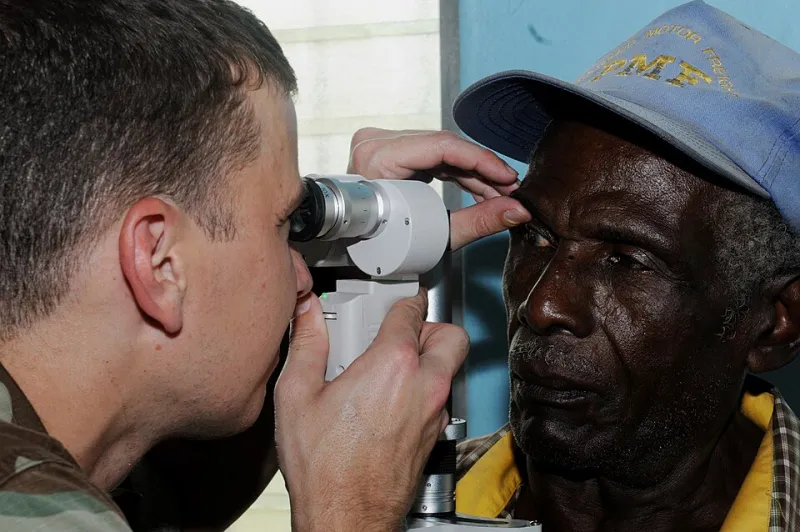
Photo: U.S. Navy photo by Mass Communication Specialist 1st Class Emmitt J. Hawks, Public domain, via Wikimedia Commons
For the better part of a century, the career trajectory for a licensed optometrist followed a predictable arc: graduate, associate at a practice, eventually own a clinic or partner in one. The physical exam lane was the center of professional gravity. That gravitational pull is not gone, but it has weakened considerably. A growing ecosystem of virtual care platforms, employer-sponsored vision programs, and remote diagnostic services is actively recruiting optometrists for roles that require nothing more than a reliable internet connection and a willingness to work differently.
Understanding this shift — and knowing how to leverage it — is increasingly important for any eye care professional navigating the 2024 job market.
The Infrastructure Behind Remote Eye Care
Telehealth in optometry is not a single product. It encompasses several distinct service models, each generating its own employment demand.
Asynchronous store-and-forward platforms allow patients to submit visual acuity data, refraction results from automated kiosks, and ocular images for later review by a licensed optometrist. Companies operating in this space employ doctors to review patient submissions and issue prescriptions or referrals within defined turnaround windows. The work is flexible and can often be performed on a per-case or part-time basis.
Synchronous video consultation services function more like traditional telemedicine, connecting patients in real time with an optometrist via video. These roles tend to involve triaging ocular complaints, managing dry eye or contact lens questions, and determining whether an in-person visit is necessary.
Employer and insurer-embedded programs represent a third category, where large self-insured employers or vision insurance carriers hire optometrists to support digital wellness initiatives, conduct virtual screenings for employees, or oversee AI-assisted vision monitoring tools.
Each model presents distinct working conditions, and practitioners should evaluate them accordingly when searching for positions.
Which Employers Are Actively Recruiting
Several well-capitalized organizations have moved aggressively into virtual eye care staffing. Warby Parker's telehealth division, EyeExam technologies, and platforms such as 1-800 Contacts' Virtual Vision Test have all built or expanded their licensed reviewer networks in recent years. Larger health systems — including those affiliated with major academic medical centers — have also integrated optometric telehealth into their ophthalmology departments, creating hybrid positions that blend in-clinic and remote responsibilities.
Beyond branded consumer platforms, optometrists are finding remote roles within:
- Digital health startups developing AI-powered retinal screening tools that require clinical oversight and quality assurance review
- Occupational health companies managing vision safety compliance programs for industrial employers
- Managed care organizations that need optometric expertise for utilization management and clinical policy work
- Health technology vendors seeking clinical advisors, product specialists, or medical affairs professionals
Job postings in these categories have become increasingly visible on mainstream healthcare job boards, though positions are often described with non-traditional titles such as "Remote Clinical Reviewer," "Teleoptometry Specialist," or "Vision Care Medical Advisor." Practitioners searching specifically for optometry jobs should use broad keyword strategies to surface these listings.
Salary Landscape: Remote vs. In-Office Compensation
The compensation picture for remote optometry roles is nuanced and continues to evolve. According to aggregated salary data from multiple industry sources, full-time remote optometrist positions currently range from approximately $95,000 to $145,000 annually, depending on employer, caseload volume, and scope of responsibility. That range is broadly comparable to associate-level in-office compensation in many mid-size markets.
However, several financial variables distinguish remote roles from their traditional counterparts:
- Geographic pay parity is not universal. Some employers apply location-based pay adjustments even for fully remote positions, while others offer a flat national rate that can be advantageous for practitioners in lower cost-of-living areas.
- Benefits packages at telehealth companies vary widely. Venture-backed startups may offer equity compensation that traditional practices cannot match, while established insurers typically provide more stable benefits structures.
- Overhead elimination represents an indirect financial benefit for practitioners who might otherwise own or lease clinic space. The absence of equipment maintenance, lab costs, and facility expenses can meaningfully improve net income.
Part-time and per-case arrangements are common entry points into telehealth work and can supplement traditional practice income. Rates for asynchronous case review typically range from $15 to $35 per case, making part-time participation viable as a secondary income stream.
Skills and Credentials Employers Prioritize
Licensure requirements for remote optometry work are state-specific and represent one of the more complex compliance dimensions of this career path. Most telehealth platforms require practitioners to hold licenses in the states where their patients are located, meaning multi-state licensure is frequently a prerequisite for full-time remote employment. The Interstate Medical Licensure Compact does not currently include optometrists, so license acquisition must be pursued individually — a time-consuming but financially worthwhile investment for practitioners committed to this space.
Beyond licensure, employers consistently emphasize:
- Electronic health record proficiency, particularly with platforms common in virtual care environments
- Strong written communication skills, given that asynchronous roles require clear, documented clinical reasoning
- Comfort with diagnostic imaging interpretation, including fundus photography and optical coherence tomography review
- Adaptability to technology-forward workflows, including familiarity with AI-assisted diagnostic tools
Practitioners who have completed continuing education in telehealth ethics, informed consent in virtual settings, or digital health law will find those credentials increasingly valued by hiring managers.
Positioning Yourself for the Virtual Market
Optometrists interested in transitioning toward remote work — whether fully or in a hybrid arrangement — should approach the process strategically. Updating your professional profile to reflect telehealth-relevant experience, even if that experience is limited to pandemic-era virtual consultations, signals awareness of the space. Pursuing licensure in high-demand states such as Florida, Texas, and California before applying to national platforms can significantly expand your eligibility pool.
Networking within digital health communities, attending virtual optometry conferences, and engaging with professional organizations that have developed telehealth practice guidelines will also accelerate your visibility to employers operating in this segment.
The remote eye care market is still maturing, and practitioners who develop expertise now will be positioned as experienced professionals when demand fully consolidates. For those willing to move beyond the exam room, the career opportunities are genuine, growing, and increasingly well-compensated.