Five Corners of Eye Care Where Your OD License Does Unexpected Work
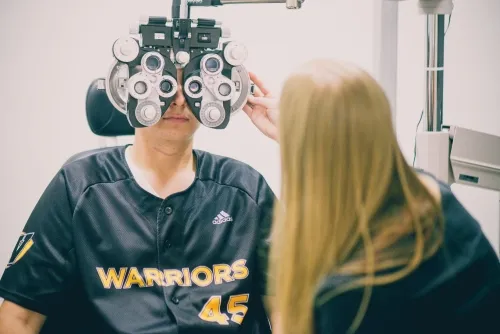
Photo: optometrist examining young athlete sports vision training equipment, via scx2.b-cdn.net
Most optometry students graduate with a mental map of exactly two career shapes: corporate retail and primary care practice. Both are honorable paths, but the profession's landscape is considerably wider — and several of its least-advertised corners offer the most interesting work and the most resilient demand.
1. Neuro-Optometric Rehabilitation
When stroke, traumatic brain injury, or concussion disrupts the visual system, patients need clinicians who understand the brain-eye connection at a rehabilitative level. Neuro-optometrists work alongside occupational and physical therapists, using prisms, vision therapy, and compensatory training to restore function.
Day to day, expect longer appointments, complex cases, and deep collaboration with medical teams. Residency training in neuro-optometric rehabilitation or binocular vision is the standard entry route, and fellowship through the Neuro-Optometric Rehabilitation Association signals expertise. Demand is strongest near trauma centers and rehabilitation hospitals, and compensation frequently outpaces general practice because of the specialized skill involved.
2. Sports Vision Performance
Professional teams, university athletics programs, and training facilities increasingly employ vision specialists to sharpen the skills that separate elite athletes: dynamic visual acuity, reaction time, contrast sensitivity, and eye-hand coordination.
The work blends assessment, technology-assisted training, and performance consulting. Additional certification through organizations like the American Optometric Association's Sports and Performance Vision committee helps, but much of the field is built through hands-on experience and relationships with coaches and trainers. Positions exist with MLB, NHL, and NFL organizations as well as collegiate programs — rare jobs, but ones with almost no competition among qualified candidates.
3. Low Vision Rehabilitation
As the population ages, macular degeneration, glaucoma, and diabetic eye disease are producing a growing cohort of patients who cannot be corrected to normal acuity with glasses or contacts. Low vision specialists prescribe magnification devices, telescopes, electronic aids, and adaptive strategies that preserve independence.
Residency training in low vision rehabilitation is the traditional path. Demand is concentrated in VA hospitals — which offer excellent benefits and federal loan repayment — and in community agencies serving seniors. The clinical relationships are long-term and deeply meaningful, and VA compensation packages are increasingly competitive with private practice.
4. Ocular Disease in a Medical Setting
Hospital-based and MD-partnered optometry — working within ophthalmology groups, retina clinics, and community health centers — places ODs at the center of medical management: glaucoma co-management, diabetic retinopathy monitoring, and pre- and post-surgical care.
The scope varies by state, but the trajectory is consistent: medically oriented optometry is expanding, and practitioners comfortable with disease management are in short supply. A residency in ocular disease strengthens candidacy considerably, and salaried hospital positions often carry stronger benefits and predictable hours than retail settings.
5. Pediatric and Vision Therapy Practice
Developmental optometry addresses the visual skills children need for reading, learning, and attention. With rising diagnosis rates of convergence insufficiency and screen-related visual stress, pediatric-focused practices are growing, and many families travel long distances to reach a qualified provider.
A residency in pediatric optometry or vision therapy, plus FCOVD fellowship through the College of Optometrists in Vision Development, marks the recognized path. Demand is strongest in suburban markets with young families, and established vision therapy practices command premium fees for their programs.
The Broader Lesson
A degree in optometry is a license to specialize, not a sentence to the exam lane. Students and early-career ODs who explore residencies, fellowships, and niche training often discover that the profession's most rewarding — and best-compensated — work happens in the corners of the field that were never on the recruitment brochure.