So You Want to Own a Practice: An Honest Look at What It Takes to Open Your Own Optometry Office

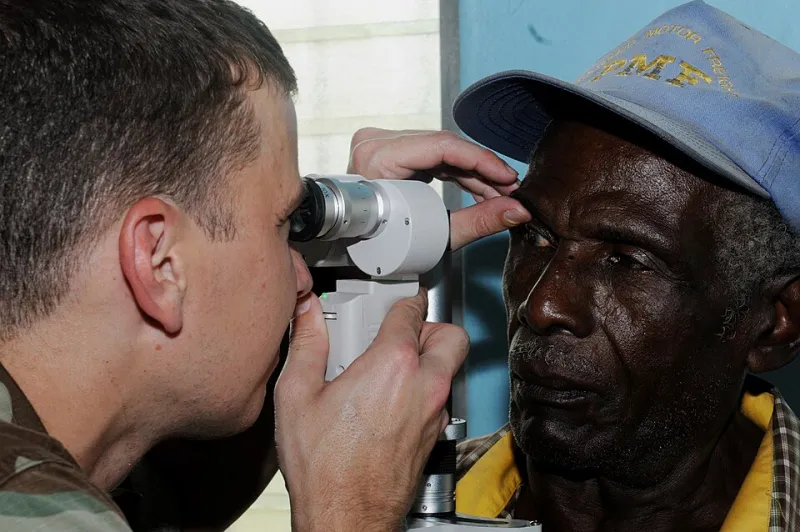
Photo: optometrist business owner reviewing paperwork in private practice office, via yourtotalvision.com
The idea of owning your own optometry practice carries a particular appeal. No one to answer to. A patient base you build yourself. The financial upside that comes with equity rather than a salary. For many ODs, it represents the clearest expression of professional independence.
But the path from licensed practitioner to practice owner is rarely as clean as the vision. It involves business loans, commercial leases, credentialing paperwork, staffing headaches, and a learning curve that clinical training does not prepare you for. This guide is not meant to discourage ownership—it is meant to give you a realistic framework for deciding whether it is the right move, and if so, how to approach it with your eyes open.
The Financial Reality: What Does It Actually Cost?
Startup costs for a de novo optometry practice—meaning one built from scratch rather than acquired—typically range from $300,000 to $500,000, depending on location, space size, and the scope of equipment you plan to offer at launch. That figure covers commercial tenant improvements, optical dispensary inventory, diagnostic equipment (including phoropters, slit lamps, OCT units if you plan to offer them, and visual field analyzers), electronic health records software, and working capital to cover operating expenses before revenue stabilizes.
Acquiring an existing practice generally requires a lower upfront capital investment in terms of buildout but introduces its own complexity: goodwill valuation, patient retention risk, staff transition, and the challenge of inheriting another practitioner's systems and culture.
Financing typically comes from one of three sources: Small Business Administration (SBA) loans, conventional bank loans specifically structured for healthcare professionals, or specialty lenders like Bank of America Practice Solutions or Wells Fargo Healthcare Finance. Most lenders will require a detailed business plan, personal financial statements, and a credit history that demonstrates responsibility. New graduates should be candid with themselves about whether their current debt-to-income ratio supports taking on additional borrowing—particularly given the average optometry school debt load, which frequently exceeds $200,000.
Licensing, Credentialing, and the Paperwork Nobody Mentions
Before you see your first patient as a practice owner, you will need to navigate a layered credentialing and licensing process that varies by state. At minimum, this includes:
- A valid, active optometry license in the state where you intend to practice
- A National Provider Identifier (NPI) for both yourself and your practice entity
- DEA registration if your state allows ODs to prescribe controlled substances
- State business entity registration (LLC, S-Corp, or PC, depending on your state's requirements for professional practices)
- Credentialing with commercial vision plans (VSP, EyeMed, Spectera, Davis Vision) and medical insurance panels if you intend to bill medical diagnoses
The credentialing process alone can take three to six months and should begin well before you plan to open your doors. Many new practice owners underestimate this timeline and find themselves unable to bill insurance for the first several weeks of operation—a cash flow problem that compounds quickly.
Choosing a Location: More Than Demographics
Location selection is one of the highest-leverage decisions in practice ownership, and it deserves more analysis than simply finding an affordable commercial space. The most important variables to assess include:
Market saturation: How many ODs currently practice within a three-mile radius? Tools like the CMS Provider Enrollment database and commercial real estate analytics platforms can help you quantify competitive density.
Payer mix: The insurance profile of your target patient population will significantly shape your revenue model. A practice in a commercially insured suburban area operates very differently from one serving a predominantly Medicaid population.
Visibility and access: Practices co-located near high-traffic retail corridors or within medical office buildings tend to build patient panels more quickly than those in lower-visibility locations, even when the latter offer lower rent.
Lease terms: Negotiate carefully. Aim for a lease with a personal guarantee limited in duration and scope, tenant improvement allowances, and renewal options that protect your investment in the space.
Payer Negotiations: The Business Skill No One Teaches
Most ODs graduate with extensive clinical knowledge and very little understanding of how insurance reimbursement actually works. Joining vision and medical insurance panels is necessary for most practice models, but the terms are negotiable to a greater degree than many new owners realize.
When contracting with major vision plans, understand your fee schedule before signing. VSP, EyeMed, and similar plans set reimbursement rates that can vary by geographic market. Consulting with an optometric practice management consultant or your state optometric association before signing panel agreements can help you identify whether the offered rates are sustainable for your anticipated cost structure.
For practices intending to bill medical insurance for conditions such as glaucoma, diabetic eye disease, or dry eye management, credentialing with Medicare and major commercial carriers opens a separate revenue stream that can meaningfully improve practice economics.
Associateship First, or Jump Straight to Ownership?
This is the question that deserves the most honest reflection. Practice ownership is not the right immediate move for every OD, and there is no professional shame in acknowledging that.
An associateship—working as an employed OD within an established practice—offers a period to develop clinical efficiency, learn practice operations from the inside, and build personal savings before taking on the financial exposure of ownership. For graduates with high student loan balances, limited business experience, or uncertainty about their preferred practice setting, two to four years in a well-structured associateship can be a strategically sound choice.
Partnership models, in which you buy into an existing practice over time, represent a middle path that some ODs find preferable. Equity accumulates without the full startup risk, and the existing patient base provides income stability from day one.
That said, there are also genuine advantages to launching a practice earlier in your career. Younger practitioners often have greater energy for the demands of startup-phase operations, fewer family obligations that constrain risk tolerance, and more time to build long-term equity.
The Emotional Dimension of Ownership
Every practice owner interviewed for this piece mentioned something that does not appear in business plans: the psychological weight of ownership. The responsibility for staff livelihoods, the anxiety of slow months, the difficulty of separating personal identity from business performance—these are real dimensions of the ownership experience that are worth discussing openly before you commit.
Ownership suits people who are genuinely energized by problem-solving, comfortable with financial ambiguity, and motivated by something beyond a stable paycheck. It is not the superior career path in an absolute sense—it is the right path for a particular type of practitioner with a particular set of goals.
If you recognize yourself in that description, the market for independent optometry practices remains viable. The infrastructure to support new owners—from lenders to consultants to professional associations—is accessible. The work is understanding what you are taking on before you sign the lease.