The Country Practice Calculation: Weighing Rural Optometry's Real Advantages

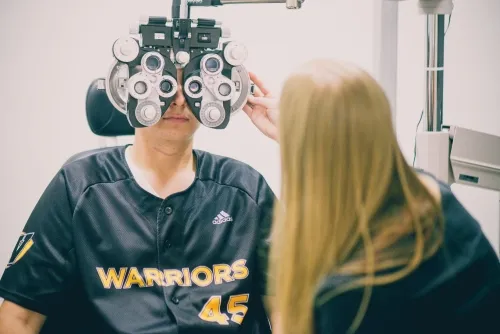
Photo: KKPCW, CC BY-SA 4.0, via Wikimedia Commons
Rural optometry is often described in two equally unhelpful ways: as a financial shortcut or as a lifestyle sacrifice. Neither captures what a small-town practice actually asks of a clinician. The real question is not whether rural practice is better or worse than a city job. It is whether the specific community, practice, and compensation package can support the career you intend to build. That requires a calculation, not a slogan.
Start With the Full Financial Picture
A rural offer may post a lower base salary than a metropolitan offer and still leave the optometrist ahead. Housing, commuting costs, childcare, and everyday expenses can differ enough to change the comparison materially. The mistake is to evaluate the salary line in isolation. Build a household budget for each location, then compare after-tax income against realistic expenses. Include the cost of travel for continuing education, specialty referrals, and the occasional weekend away, because distance has a price.
Loan repayment is the other major variable. The National Health Service Corps and various state programs can provide substantial support for clinicians who commit to qualifying communities, but eligibility is not universal. Programs are typically tied to designated shortage areas, service obligations, and annual funding cycles. A practice located in a small town is not automatically a qualifying site. Ask for the site's current designation, confirm the program's 2026 rules, and model the repayment schedule against the actual award rather than the advertised maximum.
Ownership and Autonomy Are Real, With Conditions
One of the strongest arguments for rural practice is the shorter path to ownership. With fewer competing optometrists, a retiring owner may have limited succession options, and a practice purchase price may be more attainable than in a saturated urban market. That can allow an associate to move from employee to owner years earlier than a city peer. It can also create clinical autonomy: more control over equipment, scheduling, staffing, and the services the practice offers.
Autonomy has boundaries. A rural practice may have less nearby specialist support, longer referral distances, and fewer colleagues for informal consultation. The optometrist may be the only eye care provider in town, which can be professionally rewarding and operationally demanding. Before accepting that role, ask who covers urgent after-hours calls, how referrals to ophthalmology are coordinated, and whether the practice has the diagnostic equipment needed for the care it advertises. Broad scope is valuable only when the infrastructure and license support it.
The Community Test Comes Before the Contract
The most common rural career mistake is treating the town as a backdrop rather than a daily environment. Spousal employment deserves early attention. A partner in a specialized field may find few local opportunities, and remote work is not available in every profession. School quality, childcare availability, religious and social communities, and access to health care all affect retention. These are not sentimental details. They are the reasons rural placements succeed or fail.
Community fit should be tested in person and over time. Visit on a weekday and a weekend. Drive the commute. Speak with people who are not selling the practice. Ask how newcomers are received and what happens when the local hospital or major employer changes hands. A town can be charming and still be a poor fit for a particular household.
A Five-Part Due-Diligence Framework
First, run the compensation comparison on a total-rewards basis: salary, bonus, benefits, retirement match, continuing education, license and malpractice costs, loan repayment, and cost of living. Second, assess ownership potential: practice valuation, facility condition, equipment age, payer mix, and the owner's transition timeline. Third, test clinical support: referral network, emergency coverage, staffing, and scope of practice under state law.
Fourth, evaluate community sustainability: population trends, major employers, school enrollment, housing supply, and the age of the current patient base. Fifth, plan the exit before you enter. If the practice or town does not work out, how portable is your license, your patient following, and your financial position? A rural opportunity that cannot survive a change of heart is not a bargain.
Questions to Put to the Practice and the Town
Ask the practice for patient volume by age group, no-show rates, insurance mix, and the number of optometrists who have stayed beyond three years. Ask the owner why the position is open and how patients are assigned. Ask the hospital and local employers about their stability. Ask a lender what they would require to finance a practice purchase in that county. These questions are not adversarial. They are the minimum evidence needed to distinguish a genuine opportunity from a recruitment pitch.
Rural optometry can deliver a powerful combination of earlier ownership, lower overhead, and meaningful professional responsibility. It can also isolate a clinician, strain a household, or tie a career to a shrinking patient base. The difference is rarely the size of the town. It is the quality of the calculation.